

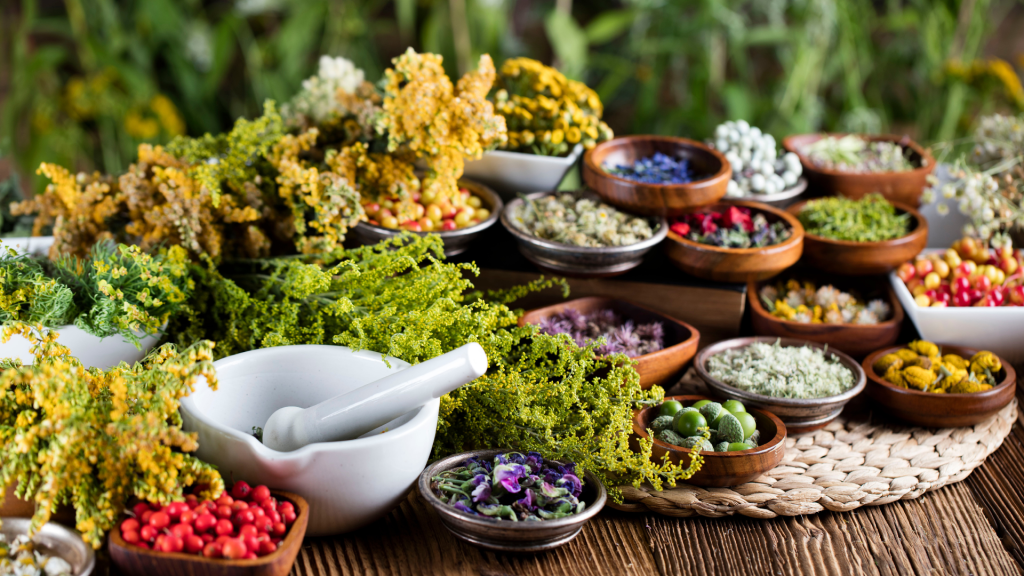
Herbal Medicine
Chinese Herbal Medicine is a central pillar of Traditional Chinese Medicine (TCM), alongside acupuncture, moxibustion, dietary therapy, and qigong. With a continuous history spanning more than two millennia, it represents one of the world’s oldest and most systematically developed medical traditions. Today, Chinese Herbal Medicine is practiced worldwide, both as a standalone system and as a complementary approach within integrative healthcare settings.
Its origins lie in ancient China, where early healers accumulated knowledge through observation of nature and clinical experience. Foundational texts such as the Shén Nǒng Běncǎo Jǐng (Divine Farmer’s Materia Medica Classic, ca. 1st–2nd century CE) catalogued hundreds of medicinal substances and categorized them according to therapeutic action and toxicity. Later, Zhāng Zhòng-Jǐng’s Shāng Hán Lùn (Treatise on Cold Damage, 3rd century CE) and Jīn Guì Yào Lüè (Essential Prescriptions of the Golden Casket) established a formula-based approach, linking herbal prescriptions to diagnostic patterns rather than isolated symptoms. Over subsequent dynasties, physicians expanded and refined this knowledge, culminating in comprehensive works such as Li Shi-zhen’s Bencao Gangmu (Compendium of Materia Medica, 16th century). This long process of clinical refinement underscores the empirical and evolving nature of this time honored discipline.
So how does this work?
The practice is guided by a diagnostic system distinct from biomedicine. Patients are assessed for patterns of disharmony involving qi (vital energy), blood, yin, yang, and body fluids, as well as the functional networks associated with the zang-fu organs. In addition to the history taken, diagnosis is based on four examinations: observation (including tongue inspection), listening and smelling, inquiry, and palpation, particularly pulse diagnosis. Treatment is typically delivered through customized herbal formulas composed of multiple ingredients. Classical formula design follows the “chief, deputy, assistant, and envoy” (jun–chen–zuo–shi) hierarchy, in which each herb has a specific role that contributes to both efficacy and safety. Herbs may be prepared as decoctions, granules, powders, pills, tinctures, or topical applications, with the form and dosage tailored to the patient’s condition, constitution, and stage of illness. In modern practice, formulas are most often prescribed in either pill or granular form for patient convenience.
What can be treated with Herbal Medicine?
Herbal formulas can treat a wide range of acute and chronic conditions, particularly those involving functional imbalance or long-term dysregulation. Common areas of treatment include digestive disorders (such as irritable bowel syndrome, bloating, reflux, and poor appetite), respiratory conditions (including colds, influenza, asthma, allergic rhinitis, and chronic cough), and gynecological issues (such as menstrual irregularities, dysmenorrhea, fertility support, menopausal symptoms, and polycystic ovary syndrome). Herbal medicine is also frequently used in the treatment of pain syndromes, including headaches, migraines, musculoskeletal pain, and arthritis, as well as dermatological conditions such as eczema, acne, psoriasis, and urticaria. In internal medicine, they are prescribed for fatigue syndromes, insomnia, anxiety, stress-related disorders, and mood disturbances. Additionally, herbal therapy is often employed as supportive care for chronic diseases, such as metabolic disorders, autoimmune conditions, and cancer-related symptoms, where they are prescribed to improve quality of life, reduce side effects of conventional treatments, and to support overall physiological resilience. Most significantly, treatment is individualized. The same biomedical diagnosis may receive different herbal prescriptions depending on the underlying TCM pattern.
How safe is Herbal Medicine?
Safety has long been a core principle of herbal medicine. Classical texts clearly distinguish between non-toxic, mildly toxic, and toxic substances and emphasize correct dosing, preparation, and combination to prevent harm. Traditional processing methods, such as steaming, boiling, or stir-frying with specific adjuncts, are used to reduce toxicity or modify therapeutic action. In modern practice, safety is reinforced through professional training, regulation, and quality control. Reputable suppliers employ botanical authentication and laboratory testing to detect contaminants such as heavy metals, pesticides, and adulterants. Practitioners are trained to recognize contraindications, adjust dosages for age and constitution, and to exercise special caution during pregnancy, lactation, or serious illness. When prescribed appropriately, adverse effects, such as transient digestive discomfort, are generally uncommon and usually mild.
How effective is Herbal Medicine?
The efficacy of herbal medicine is supported by extensive historical data and a growing body of modern scientific research. Many herbs and formulas have demonstrated anti-inflammatory, immunomodulatory, antimicrobial, hormonal, or neuroregulatory effects in pharmacological and clinical studies. Chinese Herbal Medicine is particularly valued for complex, multifactorial conditions where single-target therapies may be insufficient. Its multi-compound, multi-target, synergistic nature allows for simultaneous regulation of symptoms, underlying imbalances, and constitutional weakness. Treatment effectiveness depends heavily on accurate pattern diagnosis, appropriate formula selection, and ongoing clinical adjustment, as patterns change in response to treatment.
Herb–drug interaction risks and precautions
As with any medicinal therapy, prescribing herbal formulas carries potential risks, especially when combined with pharmaceutical drugs. Herb–drug interactions may occur through pharmacokinetic mechanisms (altering drug absorption, metabolism, or elimination) or pharmacodynamic mechanisms (additive or opposing physiological effects). For instance, herbs that influence liver enzymes, blood coagulation, or immune activity may interact with anticoagulants, immunosuppressants, or cardiovascular medications. To minimize these risks, careful precautions are taken in both formula design and clinical practice. All medications and nutritional supplements patients currently use are thoroughly discussed and reviewed prior to designing or recommending any herbal formulation. Herbs with known interaction potential may be avoided, substituted, or prescribed at lower dosages. Traditional formula architecture itself provides safeguards, as assistant and envoy herbs often moderate stronger ingredients and harmonize overall effects. Close monitoring and clear communication with other healthcare providers further enhance safety in integrative care settings.
Chinese Herbal Medicine is a sophisticated, individualized medical system with deep historical roots and contemporary relevance. It is used to treat a broad spectrum of conditions, particularly chronic, functional, and stress-related disorders. Ongoing research, regulation, and interdisciplinary collaboration continue to strengthen its role in modern healthcare while ensuring that potential risks, including herb–drug interactions, are carefully managed. When practiced by trained professionals and integrated responsibly with modern medicine, this powerful adjunct is both safe and effective. Dr. Yelverton includes herbal therapies judiciously in her practice to deliver deeply effective healing for her patients.
Clinical Disclaimer: This content is for informational purposes only and does not constitute medical advice. It is not intended to diagnose, treat, cure, or prevent any health condition. Always consult a qualified healthcare provider before starting any new treatment, including acupuncture, Chinese herbal medicine, Reiki, or other complementary therapies. Individual results may vary, and professional guidance is essential for personalized care.