

Cupping Therapy
Cupping is a therapeutic practice with deep historical roots that has been used across many cultures to promote healing, relieve pain, and support overall well-being. Recognizable by the circular marks it can leave on the skin, cupping has evolved over centuries from a traditional folk remedy into a complementary therapy used alongside modern healthcare practices.
Its origins can be traced back thousands of years. Some of the earliest recorded uses appear in ancient Egypt, where the Ebers Papyrus (circa 1550 BCE) describes cupping as a treatment for a range of ailments. The practice was widely used in ancient Chinese medicine, where it became an integral part of Traditional Chinese Medicine (TCM), and in ancient Greece, where physicians such as Hippocrates wrote about its therapeutic value. Across the Middle East, cupping, known as hijama, has been practiced for centuries and holds cultural and religious significance in some communities. Despite regional differences, these traditions shared a belief that cupping helped remove harmful substances from the body and restore balance.
Why Cup?
At its core, cupping is intended to stimulate the body’s natural healing processes. Traditionally, it was believed to draw out “stagnation,” toxins, or imbalances in bodily fluids. In modern application, cupping is often used to improve local blood flow, reduce muscle tension, and support recovery from physical strain. Cups are most commonly applied to the back, shoulders, neck, and limbs, particularly in areas of tightness or discomfort. While the theoretical explanations vary between traditional and biomedical frameworks, the central purpose remains the same: to encourage circulation, relieve discomfort, and promote relaxation.
Cupping is often requested for its potential benefits in managing musculoskeletal pain, such as back pain, neck stiffness, and sports-related soreness. Despite its appearance, the treatment itself is not painful. By creating suction on the skin, cupping may help increase blood flow to targeted areas, which can support tissue repair and reduce feelings of tightness. Some individuals also report a sense of deep relaxation following treatment, making it popular as a stress-reduction technique. In traditional systems, cupping is additionally believed to support immune function, improve energy flow, and address internal imbalances. While scientific evidence is still developing and results vary between individuals, cupping is widely regarded as a low-risk complementary therapy when properly performed.
Cupping Methods
Traditionally, cups were made from materials such as bamboo, clay, horn, or glass. Suction was often created using heat. A flame was briefly placed inside the cup to remove oxygen, and the cup was then quickly applied to the skin, creating a vacuum as it cooled. Two main forms developed over time: dry cupping, where the cups remain in place for several minutes, and wet cupping, which involved making small, superficial incisions on the skin before reapplying the cups to draw out a small amount of blood. These methods were guided by cultural knowledge and diagnostic systems specific to each tradition.
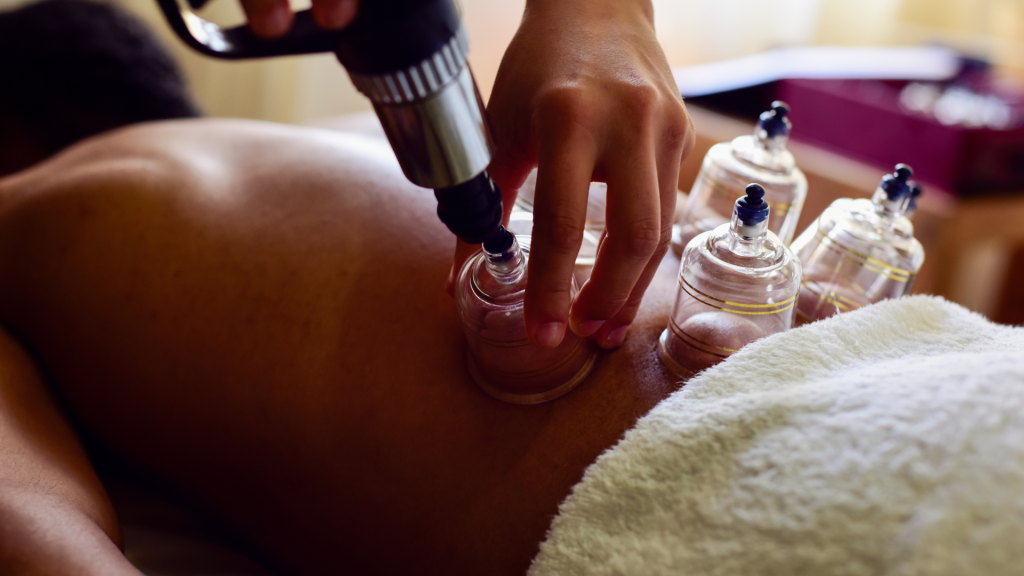
In contemporary settings, cupping has been adapted to align with modern safety and hygiene standards. Today, cups are typically made of plastic, silicone, or glass, and suction is often created using a hand pump rather than heat, allowing practitioners to control the suction intensity more precisely. Silicone cups may also be moved across the skin in a technique known as “moving cupping,” commonly used in massage and sports therapy. Modern cupping is frequently integrated into physiotherapy, chiropractic care, and wellness clinics, often in conjunction with exercise and other treatments. While the appearance of circular marks remains a characteristic feature, modern approaches emphasize comfort, safety, and individualized care.
Cupping is a time-honored practice that bridges ancient healing traditions and modern complementary medicine. Its enduring popularity reflects a continued interest in holistic approaches that support the body’s natural ability to heal.