

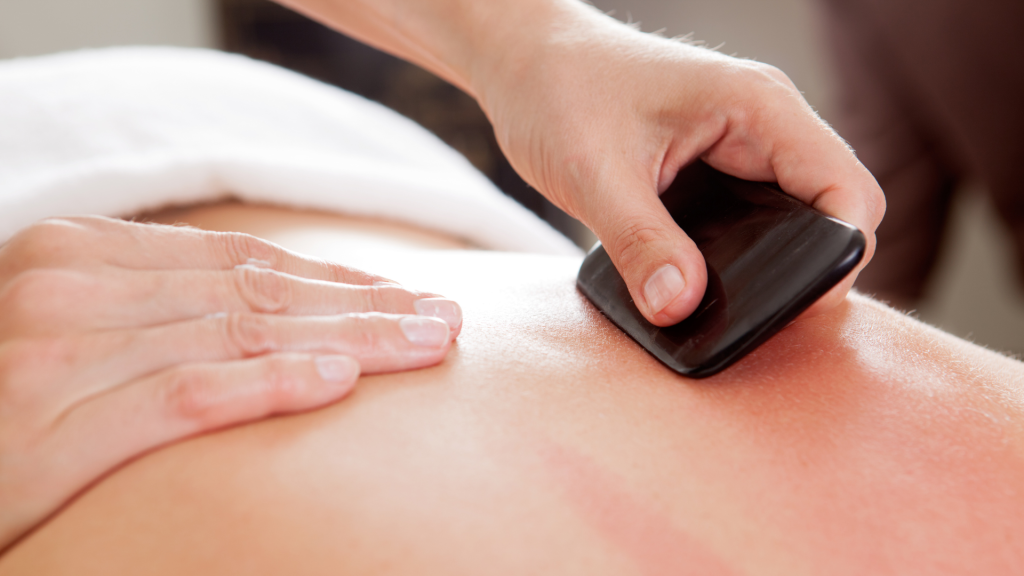
Gua Sha Therapy
Gua sha is a traditional East Asian healing technique that has been practiced for centuries as part of holistic medicine. The term “gua sha” comes from Chinese: gua means “to scrape” or “to rub,” and sha refers to the reddish marks that appear on the skin after treatment. Although these marks may look alarming to those unfamiliar with the practice, gua sha is generally considered a gentle and therapeutic method when performed correctly. Today, gua sha is used both in clinical traditional medicine and in modern wellness and beauty routines around the world.
A Little Historical Context
The roots of gua sha can be traced back more than 2,000 years to ancient China, where it was documented in classical medical texts such as the Shāng Hán Lùn (Treatise on Cold Damage Disorders). It was traditionally used as a household remedy, passed down through generations, especially in rural communities. Similar scraping techniques also appeared in other parts of Asia, including Vietnam, Korea, and Indonesia, each with local variations and names. The technique was historically used to treat acute illnesses such as colds, fevers, respiratory infections, and digestive issues. Practitioners believed that scraping the skin helped release “stagnation” in the body—blockages of Qi (vital energy) and Blood that were thought to cause pain or illness. Rectification of this obstruction and restoration of the smooth flow of Qi and Blood throughout the body is thought to disperse stagnation, reduce internal heat, and support the body’s natural healing processes. Over time, gua sha became an established technique within Traditional Chinese Medicine (TCM), used alongside acupuncture, herbal medicine, and cupping. In modern contexts, the purpose of gua sha has expanded. Body gua sha is often used to relieve muscle tension, stiffness, and chronic pain, particularly in the neck, shoulders, and back. Facial gua sha, a more recent adaptation, focuses on skincare and relaxation, aiming to support circulation, reduce puffiness, and encourage a healthier-looking complexion.
Why Receive Gua Sha?
Gua sha is associated with a wide range of potential benefits, though experiences vary from person to person. One of its most commonly reported effects is pain relief. By stimulating circulation and relaxing tight muscles, gua sha may help reduce discomfort related to tension, overuse, or poor posture. Treatment can also improve local circulation. The scraping action brings blood to the surface of the skin, which may support tissue nourishment and recovery. In traditional practice, this visible increase in blood flow was seen as a sign that stagnation was being released. Gua sha is valued for its calming and restorative effects. Many people find the treatment deeply relaxing, which may help reduce stress and promote a sense of well-being. Facial gua sha, in particular, has gained popularity for its potential cosmetic benefits, such as reducing facial tension, softening the appearance of fine lines, and supporting lymphatic drainage, which can help decrease puffiness.
While gua sha is not a cure-all, it is often used as a complementary practice, supporting overall wellness rather than replacing conventional medical care.
How is Gua Sha Performed?
Gua sha is traditionally performed using a smooth-edged tool made from materials such as jade, rose quartz, horn, or metal. The skin is first lubricated with oil, balm, or lotion to reduce friction and ensure comfort. The practitioner then uses the tool to apply firm but controlled strokes along the skin, usually in one direction. In body gua sha, strokes are commonly applied along muscles or traditional meridian pathways, often on the back, neck, shoulders, arms, or legs. The pressure is adjusted based on the individual’s condition and tolerance. Red or purple marks may appear during or after the session. These marks typically fade within a few days. Facial gua sha uses much lighter pressure. The tool is gently glided along the contours of the face and neck, following upward and outward motions. This approach focuses on relaxation, circulation, and lymphatic flow rather than producing visible marks. Dr. Yelverton uses a modern adaptation of a traditional Bian stone tool in her sessions, one that incorporates heat and vibration in its application, for a more effective treatment.
Is Gua Sha Safe?
In all forms, proper technique, hygiene, and awareness of contraindications—such as broken skin or certain medical conditions—are essential for safe practice. Scraping is not applied over bony structures but rather confined to muscle and sinew. When performed thoughtfully, gua sha remains a time-honored technique that bridges ancient wisdom and modern self-care.